
































































Perched gracefully on the slopes of Sam Mountain in Vinh Te Ward, An Giang Province, Vietnam, Hang Pagoda (officially known as Phuoc Dien Tu - Phước Điền Tự) is a living testament to nearly two centuries of spiritual devotion.
More than just an architectural marvel clinging to the cliffs, this ancient temple is a realm where history intertwines with legends of compassion—most notably the tale of the "Lady Master who tamed the serpents."
Recognized as a National Historical-Cultural Relic since 1980, Hang Pagoda stands today as an iconic symbol of the Mekong Delta’s spiritual landscape and a must-visit sanctuary for those seeking peace amidst nature.
The Founding Legacy (1845):

The Venerable Nun Thich Nu Dieu Thien (1818–1899)
Hang Pagoda was founded in 1845 (the 5th year of Emperor Thieu Tri’s reign) by Venerable Nun Thich Nu Dieu Thien. Locals respectfully call her "Su Ba Tho" (The Seamstress Master) as she was a skilled tailor before her ordination.
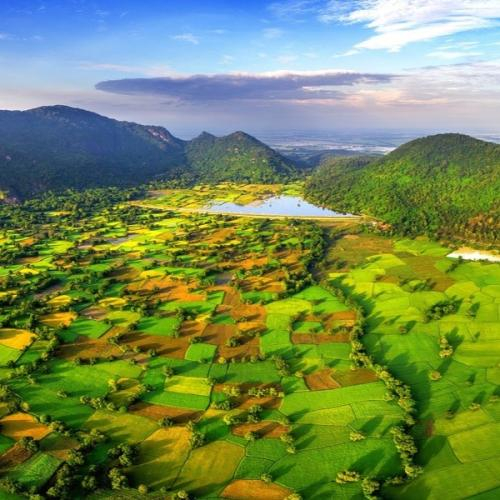
The pagoda is situated on the western side of Sam Mountain, leaning against high cliffs and overlooking the vast, emerald-green plains of the frontier.
Sacred Legends: The Power of Compassion
Hang Pagoda is synonymous with mystical tales of harmony between humanity and the wild, centered around the spiritual aura of the Lady Master.
The Legend of "Taming the Serpents"

The legendary serpents within the sacred cavern
Behind the pagoda lie the White Tiger, Green Serpent, and White Serpent caves. Legend says that when the Lady Master first arrived, two ferocious serpents (Thanh Xà & Bạch Xà) inhabited the area.
Through the power of her compassion and the recitation of the Three Refuges, she tamed them. They became her loyal guardians, listening to her chants and protecting the sanctuary without ever harming a soul.
Harmony with Nature:

The Three Holy Beings carved into the mountain cliff
During her ascetic practice, the Lady Master survived on wild fruits. It is said that local monkeys and gibbons, moved by her virtue, would often bring forest fruits as offerings. Her deep meditative states, sometimes lasting an entire week, proved her profound spiritual attainment.
Historical Development & Lineage

The founding masters and predecessors of Hang Pagoda
As a prominent "Tong Lam" (Monastic training center) of the Lam Te (Linji) Zen School, the pagoda has been preserved by generations of masters:
Most Venerable Hue Thien (Hong Chi, 1902–1986): 2nd Abbot. Renovated the Ancestral Hall (1926–1932), which is now the Main Hall.
Most Venerable Thien Chon (Nhat Nam, 1932–1998): 3rd Abbot.
Most Venerable Thien Tai (Nhat Khong): Current Abbot since September 1998.
A Final Reflection

For nearly two centuries, Hang Pagoda has stood firm amidst the mists of Sam Mountain - a symbol of mercy and stillness. Leaving the hustle and bustle of modern life behind, a step into this sanctuary is a journey toward inner peace.
Architecture & Scenery Today

The Amitabha Buddha Sanctuary
Today, the White Tiger cave has become the solemn Van Phat (Ten Thousand Buddhas) Cave. The architecture reflects Southern Vietnamese Buddhism, with curved tiled roofs nestled among rugged boulders, creating an ethereal landscape like an earthly paradise.
Experience the Serenity

An aerial view of Hang Pagoda
Take a moment to leave the world behind and immerse yourself in the profound peace amidst the clouds of Sam Mountain.
We invite you to visit Hang Pagoda in Vinh Te Ward, An Giang Province, Vietnam at least once - to let your soul rest, to rediscover inner stillness where the temple bells echo through the mist, and to explore the timeless heritage of this sacred frontier.
👉 Witness how modern innovation breathes new life into ancient tradition—explore our dedicated project:


 1Mekong.com |
2 ngày
1Mekong.com |
2 ngày
 1Mekong.com |
3 ngày
1Mekong.com |
3 ngày
 1Mekong.com |
04/03/2026 14:11
1Mekong.com |
04/03/2026 14:11
 1Mekong.com |
04/03/2026 13:43
1Mekong.com |
04/03/2026 13:43
 1Mekong.com |
03/03/2026 14:21
1Mekong.com |
03/03/2026 14:21
 1Mekong.com |
03/03/2026 08:02
1Mekong.com |
03/03/2026 08:02
 1Mekong.com |
03/03/2026 04:36
1Mekong.com |
2 ngày
1Mekong.com |
04/03/2026 14:11
1Mekong.com |
04/03/2026 13:43
1Mekong.com |
03/03/2026 14:21
1Mekong.com |
03/03/2026 08:02
1Mekong.com |
03/03/2026 04:36
1Mekong.com |
2 ngày
1Mekong.com |
04/03/2026 14:11
1Mekong.com |
2 ngày
1Mekong.com |
2 ngày
1Mekong.com |
2 ngày
1Mekong.com |
2 ngày
1Mekong.com |
3 ngày
1Mekong.com |
04/03/2026 13:43
1Mekong.com |
03/03/2026 14:21
1Mekong.com |
03/03/2026 08:02
1Mekong.com |
03/03/2026 04:36
1Mekong.com |
2 ngày
1Mekong.com |
04/03/2026 13:43
1Mekong.com |
03/03/2026 14:21
1Mekong.com |
03/03/2026 08:02
1Mekong.com |
03/03/2026 04:36
1Mekong.com |
2 ngày
1Mekong.com |
03/03/2026 04:36
1Mekong.com |
2 ngày
1Mekong.com |
04/03/2026 14:11
1Mekong.com |
04/03/2026 13:43
1Mekong.com |
03/03/2026 14:21
1Mekong.com |
03/03/2026 08:02
1Mekong.com |
03/03/2026 04:36
1Mekong.com |
2 ngày
1Mekong.com |
04/03/2026 14:11
1Mekong.com |
2 ngày
1Mekong.com |
2 ngày
1Mekong.com |
2 ngày
1Mekong.com |
2 ngày
1Mekong.com |
3 ngày
1Mekong.com |
04/03/2026 13:43
1Mekong.com |
03/03/2026 14:21
1Mekong.com |
03/03/2026 08:02
1Mekong.com |
03/03/2026 04:36
1Mekong.com |
2 ngày
1Mekong.com |
04/03/2026 13:43
1Mekong.com |
03/03/2026 14:21
1Mekong.com |
03/03/2026 08:02
1Mekong.com |
03/03/2026 04:36
1Mekong.com |
2 ngày








































TUYỂN DỤNG MỚI
SẢN PHẨM
THÔNG TIN